| Visual effects: Enhancements |
This article attempts to break down the visual enhancements contained within the psychedelic experience into simple, easy to understand titles and descriptions. This will be done without depending on metaphors, analogy's or personal trip reports. The article starts off with descriptions of the simpler effects and works its way up towards more complex experiences as it progresses.
Contents
Increased visual acuity
Increased visual acuity is defined as an enhancement of the acuteness or clearness of vision. This results in the visual details attributed to the external environment becoming heightened to the point where the edges of objects become extremely focused, clear and defined. At its highest level one may experience a new-found ability to comprehend the entire visual field at once (including the peripheral vision). In comparison, during sober living human vision is only able to perceive the small area that a person's eye is currently focused on.
Whilst under the influence of this component, it is very common for people to suddenly notice patterns and details that they may have never previously appreciated or acknowledged. For example, when looking at sceneries, nature, and everyday textures, the complexity and beauty of the visual input suddenly becomes overwhelmingly obvious.
Image examples
-
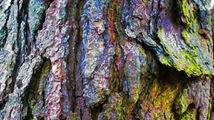
Tree Bark by Chelsea Morgan
-
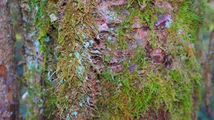
Moss on tree bark by Chelsea Morgan
-
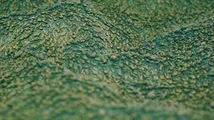
Towel by Chelsea Morgan


Enhancement of colour
Enhancement of colour can be defined as the experience of colours becoming extremely bright, vivid and starting to stand out more. During the experience of this component reds will seem “redder”, greens will seem “greener” and all colours will be become much more distinct, powerful and intense than they could ever possibly be during everyday, sober living.
Image examples
-
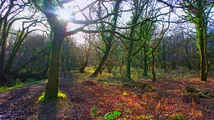
The woods by Chelsea Morgan
-
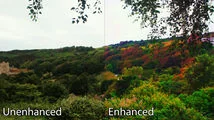
Showing differences by Chelsea Morgan
-
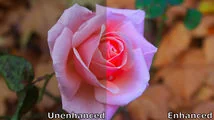
Rose by Chelsea Morgan
-
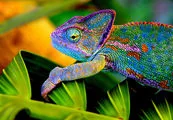
Chameleon by Anonymous
-

Japanese garden by Anonymous


Enhanced pattern recognition
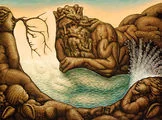
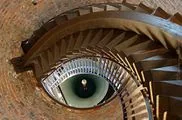
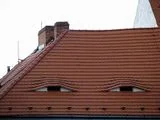
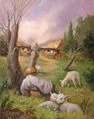
Enhanced pattern recognition can be described as an increase in a person's ability to recognize significant imagery (usually faces) within vague stimuli.
This innate ability which human beings possess in everyday life is referred to by the scientific literature as pareidolia and is very well documented. Common examples of this include spotting faces in everyday objects and viewing clouds as fantastical objects.
During this experience pareidolia can become significantly more intense and pronounced. For example, scenery may look remarkably like people or objects, every single leaf on a tree may look like many tiny green faces, or clouds might appear to be easily recognizable as fantastical objects, all without any visual alterations actually taking place.
Image examples
-

Face in a cloud by Neil Usher
-

The Forest Has Eyes by Bev Doolittle
-
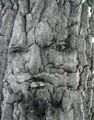
Face within tree bark by Anonymous
-
Absents of the mermaid by Octavio Ocampo
-
Eye of the tower by Davide Lombardi
-
Squinting eyes on a roof top by Anonymous
-
Optical illusion by Oleg Shuplyak
-
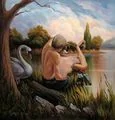
Optical illusion by Oleg Shuplyak
-

Death Rose by Anonymous
-
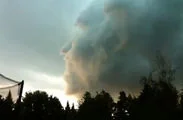
Face within a cloud by Denis Farmer
-
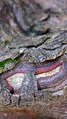
Smile in tree bark by Chelsea Morgan


Magnification
Magnification can be described as an enhancement of sight which results in the experience of a portion of the external environment within one's visual field appearing closer, zoomed in, larger and more defined in proportion to the surrounding environment than it actually is. This is to the point where it allows one to see objects in a high level of detail across greater distances than is possible within everyday life.
At its lower levels, this can allow people to see objects that are within reaching distance as closer than they really are, resulting in a general enhancement of visual capabilities. At its higher levels, this can allow people to see objects as if they were right in front of them across seemingly impossible stretches of distance ranging from between several feet to hundreds of meters. Since this is most likely a physiological impossibility, it suggests that higher level visual magnification may actually be a seamless hallucinatory state which predictively simulates the details within distant visual input in a realistic and convincing manner.
This effect is uncommon but can spontaneously manifest itself for short periods of time under the influence of certain psychedelics such as LSD or Ayahuasca. It is considerably more likely to occur if one spends extended periods of time staring at an object or scene within the distance.


