Visual effects |

This article attempts to break down the potential visual effects contained within the hallucinogenic experience into simple, easy to understand titles, descriptions and levelling systems. This is done without depending on metaphors, analogies or personal trip reports. The article starts off with descriptions of the simpler effects and works its way up towards more complex experiences as it progresses. For more subjective effect components see our complete index.
Contents
- 1 Enhancements
- 2 Suppression
- 3 Distortions
- 3.1 3-Dimensional textures
- 3.2 After images
- 3.3 Colour replacement
- 3.4 Colour shifting
- 3.5 Diffraction
- 3.6 Drifting
- 3.7 Depth perception distortions
- 3.8 Environmental cubism
- 3.9 Environmental orbism
- 3.10 External geometry
- 3.11 Perspective distortions
- 3.12 Recursion
- 3.13 Image examples
- 3.14 Scenery slicing
- 3.15 Symmetrical texture repetition
- 3.16 Tracers
- 3.17 Visual haze
- 4 Geometry
- 4.1 1. Visual Noise
- 4.2 2. Motion and Colour
- 4.3 3. Partially Defined Geometry
- 4.4 4. Fully Defined Geometry
- 4.5 5. 3-Dimensional Geometry
- 4.6 6. Partially Overriding Visual Perception
- 4.7 7. Fully Overriding Visual Perception
- 4.8 Level 8A and Level 8B
- 4.9 8A - Exposure to semantic concept network
- 4.10 8B - Exposure to inner mechanics of consciousness
- 4.11 Image examples
- 4.12 Variations
- 5 Hallucinatory states
- 6 See also
- 7 References
Enhancements
Colour enhancement
Colour enhancement can be defined as the experience of colours becoming extremely bright, vivid and starting to stand out more. During the experience of this component reds will seem “redder”, greens will seem “greener” and all colours will be become much more distinct, powerful and intense than they could ever possibly be during everyday, sober living.
Image examples

Showing differences by Chelsea Morgan

The Woods by Chelsea Morgan

Japanese Garden by Anonymous
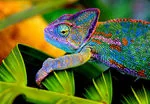
Rose by Chelsea Morgan.

Paradise island by Subsentience

Rose by Chelsea Morgan


Magnification
Magnification can be described as an enhancement of sight which results in the experience of a portion of the external environment within one's visual field appearing closer, zoomed in, larger and more defined in proportion to the surrounding environment than it actually is. This is to the point where it allows one to see objects in a high level of detail across greater distances than is possible within everyday life.
At its lower levels, this can allow people to see objects that are within reaching distance as closer than they really are, resulting in a general enhancement of visual capabilities. At its higher levels, this can allow people to see objects as if they were right in front of them across seemingly impossible stretches of distance ranging between several feet to hundreds of meters. Since this is most likely a physiological impossibility, it suggests that higher level visual magnification may actually be a seamless hallucinatory state which predicitively simulates the details within distant visual input in a realistic and convincing manner.
This effect is uncommon but can spontaneously manifest itself for short periods of time under the influence of certain psychedelics. It is considerably more likely to occur if one spends extended periods of time staring at an object or scene within the distance.
Pattern recognition enhancement

Pattern recognition enhancement can be described as an increase in a person's ability to recognize significant imagery (usually faces) within vague stimuli.
This innate ability which human beings possess in everyday life is referred to by the scientific literature as pareidolia and is very well documented. Common examples of this include spotting faces in everyday objects or perhaps viewing clouds as fantastical objects.
During the experience of this effect pareidolia can become significantly more intense and pronounced. For example, scenery may look remarkably like people or objects, every single leaf on a tree may look like many tiny green faces, or clouds might appear to be easily recognizable as fantastical objects, all without any visual alterations actually taking place.
Image examples

Smile in tree bark by Chelsea Morgan
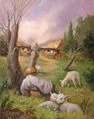
Optical illusion by Oleg Shuplyak
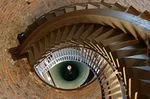
Eye of the tower by Davide Lombardi
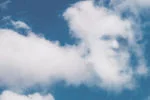
Face in a cloud by Neil Usher
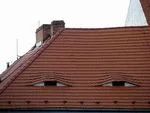
Squinting eyes on a roof top by Anonymous

Skullflower by Anonymous
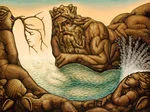
Absents of the mermaid by Octavio Ocampo
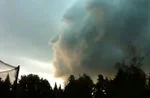
Face within a cloud by Denis Farmer
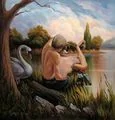
Optical illusion by Oleg Shuplyak
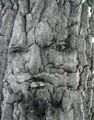
Face within tree bark by Bev Doolittle

The Forest Has Eyes by Bev Doolittle


Acuity enhancement
Acuity enhancement is defined as an enhancement of the acuteness or clearness of vision. This results in the visual details attributed to the external environment becoming heightened to the point where the edges of objects become extremely focused, clear and defined. At its highest level one may experience a new-found ability to comprehend the entire visual field at once (including the peripheral vision). In comparison, when one is sober their vision is only able to perceive the small area that their eye is currently focused on.
Whilst under the influence of this component, it is very common for people to suddenly notice patterns and details that they may have never previously appreciated or acknowledged. For example, when looking at sceneries, nature, and everyday textures, the complexity and beauty of the visual input suddenly becomes overwhelmingly obvious.
Image examples

Moss on tree Bark by Chelsea Morgan
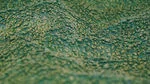
Towel by Chelsea Morgan
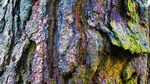
Tree Bark by Chelsea Morgan


Suppression
Double vision
Double vision can be the described as the experience of doubled vision identical to that which occurs when one crosses their eyes. Depending on the intensity, this can often result in a loss of the ability to function and perform basic tasks which necessitate the use of sight but can be solved by simply closing one eye. This suggests that the double vision is occurring because the brain is simply overlaying the data received from both eyes on top of each other without rendering the information into a singular 3-dimensional image as it normally does in day to day life.
Image examples
Double vision on a PC by Arnold Layne
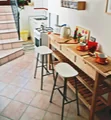
Double vision in a kitchen by Anonymous
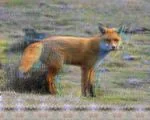
Double vision on a fox by Arnold Layne

Desktop double vision by Chelsea Morgan
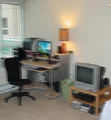
Double vision at a desk by Anonymous


Pattern recognition suppression
Pattern recognition suppression can be defined as the experience of a partial to complete inability to process currently perceivable visual information regardless of the clarity, detail and clearness of its visual acuity. For example, although one may be able to see what is in front of them with perfect detail, they will not be able to register or label what is in front of them. This can render even the most common of everyday objects as unrecognisable.
Vibrating vision

Vibrating vision (also known as nystagmus) can be defined as rapid and constant involuntary eye movements in which the eyes shift from left to right in such quick succession that one's vision begins to vibrate and blur. This can severely impair vision and result in a loss of the ability to function and perform basic tasks which necessitate the use of sight.
Visual acuity suppression

Visual acuity suppression can be described as the experience of one's sense of vision becoming partially to completely blurred and indistinct. This effect may affect the entirety of one's vision or specific sections of it. Depending on its intensity, this can often result in a loss of the ability to function and perform basic tasks which necessitate the use of sight.
Frame rate suppression
Frame rate suppression is a visual suppression where one's FPS (frames per second) are significantly reduced or slowed down. While under the influence of this effect, one might feel like their vision is lagging and frame-like (similar to a strobe light). This effect is generally reported with hallucinogens, particularly dissociatives.
Distortions
3-Dimensional textures
3-Dimensional textures can be described as a visual distortion which results in rough or detailed textures progressively extending and stretching outward from the surfaces which they reside upon. It's appearance manifests with the same colours of the texture it was created from and renders in the form of a detailed 3-dimensional structure somewhat similar to complex, opaque and solidified smoke. These structures maintain a size which is consistent with the width of the texture from above but can range from anywhere between several inches to several feet in height.
After images

After Images are a visual distortion that can be described as an image continuing to appear in one's vision after the exposure to the original image has ceased. A common form of after images is the bright glow that seems to float before one's eyes after looking into a light source for a few seconds. This effect is similar to tracers but differs in the way that it creates smooth blurs behind moving objects.
Within hallucinogen usage, still overlayed images of moving objects are commonly left in place of where the object once was. This creates a series of overlayed images across one's visual field which become less distinct the further they are away from the moving object's current position. Another manifestation of this effect can be described as being able to see the external environment for several seconds after one closes their eyes before it gradually fades away.
Colour replacement
Colour replacement is an effect which can be described as the experience of one's visual field as a whole or specific objects and sections within it becoming replaced with an alternative colour which differs from their appearance when sober. For example, one's vision could turn purple, the green leaves of a tree could become red or a black car could become white.
Although similar, this component differs from colour shifting as it is a static change in colour which remains still and semi-permanent as opposed to constantly cycling between various hues, tints and shades.
Colour shifting
Colour shifting can be described as a visual effect in which the colours of various objects (particularly bright or out of place objects) shift and change their appearance through a repeated cycling of varying colours in a strange and fluid motion across their surface. For example, moss on a rock could physically shift from green to red to blue to any other colour and then back to green again in the visual style of a smooth and seamless animated loop.
Image examples


Diffraction
Diffraction can be described as a visual effect where as a result of pupil dilation, some light sources which hit the lens of the eye will appear spread into a larger range of the spectrum rather than a consolidated wavelength. This results in the experience of rainbows and spectrums of colour embedded across the brighter parts of one's visual field and can be a common experience during day to day life for some people.
Image examples
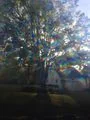
Diffraction Shades by capture-life-with-lens.tumblr.com
Glare by Anonymous


Drifting
Visual drifting can be described as the experience of objects and scenery appearing progressively warped, melted and morphed across themselves. These alterations gradually increase as a person stares, but are non-permanent and will reset to their normal appearance the moment one double takes.
This effect is capable of manifesting itself across 4 different levels of visual intensity defined below.
- Peripheral - The most basic form of visual drifting can be described as a wiggling of straight lines within the external environment. This occurs exclusively within one's peripheral vision and cannot be directly looked at.
- Direct - At this level, visual drifting does not necessarily increase in its intensity, but can now be directly looked at within a person's central line of sight. This partially alters the appearance and form of shapes, objects and sceneries within the external environment, causing them to subtly drift, bend and morph.
- Distinct - At this level, visual drifting becomes powerful enough to drastically alter and transform the shape of specific objects within one's external environment. This is often to the point where they can become progressively unrecognizable in comparison to their original form assuming one stares at the distortion and keeps their eyes relatively motionless.
- All-encompassing - At the highest level of visual drifting, the intensity becomes powerful enough to distort not just specific objects beyond recognition but every single point of a person's vision and the entirety of the external environment in its whole. This creates the appearance of an extremely smudged, warped and blended unrecognizable mass of visual data.
The particular style of this visual effect depends on the specific continuously changing direction, speed, and rhythm of the distortion. This results in a small variety of different manifestations which are defined and listed below.
Morphing
Morphing can be described as an effect of visual drifting which is completely disorganized and spontaneous in both its rhythm and direction. It results in objects and scenery appearing to gradually change, morph and warp in their size, shape, configuration and general appearance.
Breathing
Breathing can be described as an effect of visual drifting which makes objects and scenery appear to be steadily contracting inwards and expanding outwards with a consistent rhythm in a similar fashion to the lungs of a living organism.
Melting
Melting can be described as an effect of visual drifting which results in objects and scenery appearing to completely or partially melt. It begins at lower doses as a gradual liquidization of objects which causes them to subtly droop, wobble, and lose their structural integrity. This gradually increases until it becomes impossible to ignore as the lines, textures, and colour between solid objects melt into one another in an extremely fluid style.
Flowing
Flowing can be described as an effect of visual drifting which seems to occur almost exclusively on textures (particularly if they are highly detailed, complex, or rough in appearance). This results in the textures flowing like a river in a seamless, looped animation and is particularly common on wood grain or the fur of animals.
Image examples
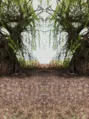
Symmetric drifting patterns by Anonymous

Breathing wooden post by Chelsea Morgan

Redwoods by CountRoloff
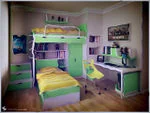
Drifting by Anonymous

Breathing wooden post by Anonymous

Flowing fruit by Anonymous
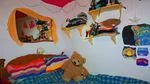
Wibbly Wobbly Bedroom by Chelsea Morgan

White Wolf Drinking Water by Anonymous

Drifting Cat by Anonymous

The Starry Night by Vincent Van Gogh

Drifting gun by Anonymous
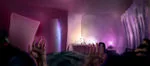
Visual drifting by Anonymous
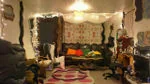
Living room by Chelsea Morgan
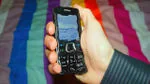
Mobile phone by Chelsea Morgan
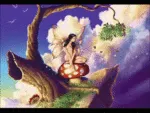
Lucy the Fairy by StingrayZ


Variations
- Intricate vs. Simplistic – In terms of its complexity, drifting can alter the external environment in a way that spreads out in many different complex directions and results in the original piece of sensory input becoming completely unrecognizable in appearance. Alternately, it will be simplistic in nature and stick to simple warping, wiggling and bending even at high dosages of psychoactive substances.
- Slow vs. Fast – Drifting can manifest itself as something that progresses in its visual alterations at a fast and sudden rate or it can manifest gradually and slowly as a person stares into it.
- Smooth vs. Jittery – In terms of its motion, drifting can manifest itself as a smooth, fluid and flawless movement or it can manifest as jittery with an extremely slow frame rate that moves in sudden and partial transitions.
- Static vs. Fleeting – In terms of its permanence, drifting will either maintain its position until one performs a double take or will be extremely fleeting in its nature, meaning that it will reset almost as soon as a person tries to look directly at it.
- Realistic vs. Unrealistic – Drifting can either look convincing in its appearance or it can look extremely cartoon-like and unrealistic.
Depth perception distortions
Depth perception distortions can be defined as the experience of both extreme and subtle distortions in depth perception. This is where the depths and layers of the scenery in front of you can become exaggerated, skewed or completely rearranged in their organization. A classic example of this could be the swapping of layers in a scenery. This is where objects in the background come into the foreground and objects in the foreground get pushed into the background.
Another example of skewed depth perception can be described as a complete loss of it. This occurs when the different sections of a scenery unify into a flat 2-Dimensional image regardless of their actual distance from the observer.
Environmental cubism
Environmental cubism is a distortion characterized by a visual segmenting or partitioning of the external environment into squares and cubes of varying amounts and sizes. Once established, these partitions begin to slowly drift away from their original location and often change in size leading to gaps that are formed in between them. The space within these gaps is either completely dark or composed of tightly bound visual geometry.
This dark space can eventually grow, progressively decreasing the size of the cubes until one finds themselves surrounded by a dissociative hole. It is not uncommon to be able to innately feel and detect the details and layout of both the different sections of the distortion and the gaps between them.
This effect is remarkably similar in its appearance to cubist photography and artwork.
Image examples

Cubism woods by Chelsea Morgan
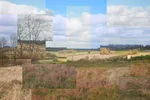
Cubism Field by Chelsea Morgan
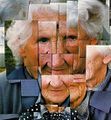
Hockneys Mother by David Hockney
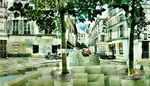
Photo montage by David Hockney
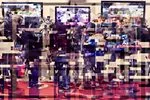
Chrono Cubist by Diego Kuffer


Environmental orbism
Environmental orbism is a visual distortion characterized by a partitioning of the environment a person is currently in. This is manifested in the form of spherical 3-dimensional "orbs" that retain most of the detail and identity of the space they're distorting.
These orbs vary in size which leads to gaps that are formed in between. The space within these gaps is either completely dark or composed of tightly bound visual geometry. This dark space can eventually grow, progressively decreasing the size of the orbs until one finds themselves surrounded by a dissociative hole.
Image examples
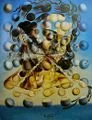
Galatea of the Spheres by Salvador Dalí
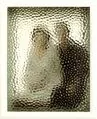
Coloured Dreams by Bonnie rychlak
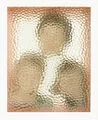
Tiresome Threesome by Bonnie rychlak
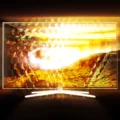
Fly Vision by Perry


External geometry
External geometry (also called integrated geometry or embedded geometry) can be described as a form of a-typical psychedelic geometry which differs from standard geometry through the way it is manifested. Instead of being independent from the external environment and floating in front of one's vision across a separate translucent veil, it is comprised of and embedded within parts of the external environment.
This results in certain textures such as grass, carpets, asphalt, tree branches and dense vegetation forming into extremely complex geometric structures that are comprised of the original material which they are manifesting from. These structures tend to be partially symmetrical in nature, but also include form constants, fractals and disorganized geometric patterns.
The experience of this component is distinct from traditional geometry as it does not occur within its standardized levelling system and therefore seems to be an entirely separate subjective effect. It is worth noting that this component may be the result of a synergy between symmetrical texture repetition, 3-dimensional textures and geometry.
Perspective distortions
Perspective distortions can be described as subtle to drastic changes in the size and distance attributed either to a person’s body, to specific parts of the external environment or to the external environment as a whole.
When affecting distance, perspective distortions can make things seem as if they are physically closer or further away than they usually would be. For example, this can range from a subtle experience such as the other side of the room feeling marginally further away than it usually would be or it can be an extreme experience such as feeling as if the horizon is right in front of you.
When affecting size, perspective distortions can make things seem as if they are physically smaller or larger in terms of the sense of size that one would usually attribute to them. For example, this can range from a subtle experience such as the the room feeling marginally smaller and more cramped than it usually would be or it can be an extreme experience such as feeling as if the room is hundreds of miles wide or even infinitely huge.
Feelings of suddenly having an impossibly giant or tiny body are also a very common manifestation of this effect. This feeling is already known by the scientific literature as “Alice in Wonderland Syndrome” where it is seen as a temporary condition often associated with migraines, brain tumours and the use of psychoactive drugs. The effect can either be specifically attributed to the body as a whole or certain parts of it. For example, feelings of having a huge head or tiny limbs are entirely possible.
Recursion

Recursion can be described as a visual distortion which manifests spontaneously for temporary periods of time. Once manifested, it partially to completely alters the appearance of one's external environment by repeating specific sections of itself across itself in a self-similar fashion. This experience results in the appearance of fractal-like patterns which often zoom into or away from the original image.
Image examples


Scenery slicing

Scenery slicing can be described as an effect which only occurs spontaneously and rarely sustains itself for more than several seconds. The experience of this effect splits the visual field into separate sections. These individual slices then proceed to drift slowly away from their original position before disappearing and resetting to normality.
The organisation of these slices show great variety; they can be as simple as three separate sections or extremely complex with formations such as multiple intricate slices of moving interlocking spirals or an infinite variety of other potential geometric designs.
Image examples

A Walk in the Park by Chelsea Morgan
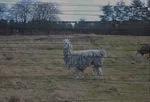
Llama by Chelsea Morgan

Scenery Slicing by Subsentience
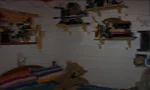
Dissociative scenery slicing by Chelsea Morgan
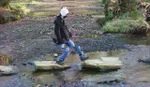
Finn Jumping Rocks by Chelsea Morgan


Symmetrical texture repetition

Symmetrical texture repetition can be described as a distinct visual alteration which specifically manifests itself through rough textures such as grass, carpets, asphalt, tarmac, towels, rugs, gravel, general bracken, dense vegetation, fallen leaves, tree bark and more.
It can be described as the texture becoming mirrored repeatedly over its surface in an intricate and symmetrical fashion that is consistent across itself. This maintains the same level of detail no matter how closely one attempts to look at the distortion.
These forms are often complemented by the simultaneous experience of pattern recognition enhancement, resulting in the appearance of a huge array of abstract forms, imagery and patterns embedded within and across the symmetry.
Image examples
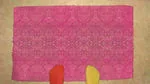
Bathroom Rug by Chelsea Morgan
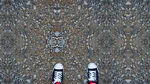
Gravel by Chelsea Morgan
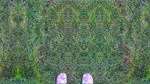
Grass by Chelsea Morgan
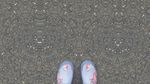
Asphalt by Chelsea Morgan
Paradise island by Subsentience

150ug-ish outside by timedilation
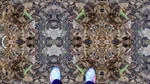
Leaves by Chelsea Morgan
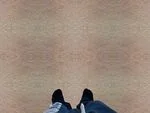
Symmetrical carpet repetition by Subsentience

Ice by Chelsea Morgan
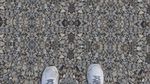
Stones by Chelsea Morgan
Symmetric drifting patterns by Anonymous
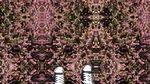
Flower bush by Chelsea Morgan


Tracers
Tracers can be described as the experience of trails being left behind moving objects such as people, birds or cars in a manner that is similar to those found in long exposure photographs. They can manifest as exactly the same colour of the moving object which is producing it or can sometimes be a seemingly randomly selected colour of their own.
A near consistent way to reproduce this visual effect is to move one's hand in front of their face or throw an object under the influence of a moderate dose of psychedelics.
Tracers can be broken down into 4 basic levels of visual intensity. These are defined below as:
- Transparent - The most basic form of tracer can be described as an almost completely transparent after image which disappears quickly and drags shortly behind moving objects.
- Translucent - At this level, tracers increase in their length to become at least roughly half as long as the distance across the visual field which the object it is following has moved. In terms of clarity, the tracers shift from barely visible to distinct and partially transparent in colour.
- Opaque - At this level, tracers become completely solid in appearance and opaque in their colour with distinct and sharp edges to their shape which draw a clear contrast between the tracer itself and the background behind it. They become equal in length to the distance across the visual field which the object it is following has moved in and can remain in the air for up to several seconds.
- All-encompassing - The highest level occurs at the point when a person’s visual field has become so sensitive to the creation of tracers that the entirety of it smudges and blurs into an all-encompassing tracer at the slightest movement of the eye. This can make it extremely difficult to see unless the eyes are kept still and the tracer remains in the air almost indefinitely or until one looks elsewhere within their visual field.
Image examples
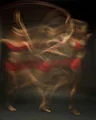
Motion by Bill Wadman
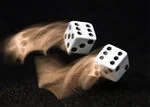
Tumbling Dice by Rosendahl

Shamanic tracers by Anonymous
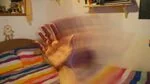
Tracers by Chelsea Morgan and ohwatever


Visual haze
Visual haze can be described as an effect which distorts the surrounding environment to make it appear as if the air is shrouded in an imaginary cloud of smoke, fog or haze. This effect varies in its intensity, ranging from subtle and barely visible to all-encompassing to the point of significantly impairing one's vision. This is commonly an effect with deliriants such as DPH and is commonly reported to occur on cannabis and psychedelics in some users as well.
Geometry

Geometry can be described as the experience of a person’s field of vision being partially or completely encompassed by fast-moving, kaleidoscopic and indescribably complex geometric patterns, form constants, phosphenes, shapes, fractals, structures and colour. These geometric forms can also become structured and organized in a way that presents genuine information to the person experiencing it far beyond the perception of meaningless, although complex, shapes and colours. This happens through the experience of innately understood geometric representations that feel as though they depict specific concepts and neurological components that exist within the brain in a manner that is extremely detailed.
Geometry never stands still at any point and remains extremely fast-changing and self-transforming in terms of its shape and style. During this process, the geometry naturally drifts laterally or radially across the visual field to create overlapping webs of many arising and decaying geometric patterns, all of which are visible within a single perceptual frame.
There are eight different levels of visual geometry, each one increasingly complex and difficult to comprehend. These are defined and documented below:
1. Visual Noise
This is the most basic level of geometry and can be experienced in a completely sober state. It can be described as visual noise or static combined with random light and dark red regions that can be seen under the eyelids.
2. Motion and Colour
This level is also easily obtainable without hallucinogens and can be described as the appearance of unstructured regions of fleeting flashes and clouds of colour.
3. Partially Defined Geometry
At this level, complex indescribable shapes and patterns begin to show themselves. However, the patterns can be described as strictly 2-dimensional. Geometry at this level is fine, small and zoomed out in size with a dark colour palette that limits itself to only a few different shades such as blacks, reds and dark purples. They are displayed in front of both the open and closed eye visual field across a flat veil of geometry, but are significantly more detailed with the eyes closed or within dark environments.
4. Fully Defined Geometry
This is the level where the detail in which the geometry displays itself becomes profoundly complex but remains strictly 2-Dimensional. At this point, the geometry becomes larger in size and extremely intricate in detail with a colour palette that is limitless in its possibilities. They are displayed on both the open and closed eye visual field across a flat veil of geometry that floats directly in front of the eyes, remaining significantly more detailed with the eyes closed or in dark environments.
5. 3-Dimensional Geometry
At level five, the geometry will become fully 3-dimensional in its shape and position across the visual field. This adds a new layer of visual complexity and leaves them sprawled out across the surfaces, walls, objects and furniture of one's environment instead of displaying themselves across a basic and flat veil in front of one's visual field.
6. Partially Overriding Visual Perception
At this point, the geometry has become so intense, vivid and bright that it has begun to block out and replace the external world. At level six, the environment begins to be replaced by geometry, with objects and scenery transforming into sprawling masses of geometry or simply being blocked out and covered by them in a manner that drastically impairs the use of one's normal vision. From this level of geometry onwards, though this is more common at higher levels, it is possible to view geometry which is perceived by the tripper to be four-dimensional or above, or created from new ineffable, non-euclidean or nonsensical geometric principles.
7. Fully Overriding Visual Perception
As the geometry continues to become more intense, vivid and bright it now completely blocks out or replaces the external world and one's sense of normal sight becomes completely impaired. This creates the sensation that one is no longer within the external environment but has "broken through" into another reality.
Level 8A and Level 8B
Once the geometry reaches its eighth and final level, there is not one singular pinnacle of visual geometry but two. It seems that depending on subtle environmental factors, one's own state of mind and the substance consumed, geometry is capable of forking off into two separate versions of its highest possible level. This means that level 8 geometry will have to be separated into two distinct categories of equal intensity known as levels 8A and 8B.
Once visual geometry reaches level 8A or 8B, it begins to become structured and organized in a way that presents genuine information to the person experiencing it far beyond the preceding seven levels of meaningless although complex shapes and colours. This happens through the experience of innately understood geometric representations that feel as though they depict specific concepts and neurological components that exist within the brain. Although this is also possible at lower levels, it does not occur consistently in the same way that it does at level 8A and 8B. At this point, concepts can be seen as not just embedded within one's closed or open eye visual field but can also be simultaneously felt through indescribably complex physical and cognitive sensations.
8A - Exposure to semantic concept network

8A geometry is one of the two eighth and final levels of visual geometry; the other is 8B geometry.
The experience of level 8A can be described as the feeling of being exposed to a seemingly infinite mass of geometry comprised entirely of innately readable geometric representations which simultaneously convey every single internally stored concept, memory, and neurological structure stored within the subconscious mind all at once. This results in a profound and overwhelming sensation which is consistently interpreted by people who undergo it as experiencing the entirety of existence, everything, the universe, all that there ever was, and all that there ever will be in a single instant.
This experience is not just perceived as visual geometric data, but is also physically felt in an incomprehensible level of detail throughout every point across itself as complex cognitive and tactile sensations. These sensations convey an equal amount of innately understandable information as that which is experienced through one's sense of vision and occur simultaneously alongside of it.
At the lower side of level 8A, this effect is something that fluctuates wildly and remains neither constant nor consistent in its intensity. Instead, it is temporarily triggered by the experience of a concept. For example, if somebody were to say the word “Internet” to a person who is currently undergoing this state, they would see the mind's concept of the Internet immediately manifested in a geometric form amidst the very center of their visual field. This form quickly branches out from itself in a fashion similar to an ineffable spider diagram. It expands to envelop the concepts which one associates with the Internet and then branches out again to include the concepts one associates with those before repeating the process of branching out further to represent the concepts associated with these ad infinitum. Within 2 - 3 seconds, this exponentially expands within a sudden perceptual flash to include every single internally stored concept within the subconscious memory banks of one's mind simultaneously.
Once this occurs, the sensory overload temporarily disconnects one from their external environment and results in simultaneous ego death/long-term memory suppression before re-stacking the person back into reality until something triggers the process again (usually immediately). The effect snaps one in and out of reality repeatedly and the process is triggered continuously. It's worth noting, however, that at this level it can (to a certain extent) be held at bay through continuous physical movement. This is because movement stops the process from branching out into everything by not giving the effect the time it needs to lock onto a concept.
As the dose of the psychoactive substance is increased, the process becomes easier to trigger whilst extending in its length and duration. This eventually results in a stable state of complete disconnection from the external environment alongside of sustained ego death/long-term memory suppression and a lasting sense of experiencing the entirety of one's neurological structure and internally stored semantic concept network.
8B - Exposure to inner mechanics of consciousness

8B geometry is one of the two eighth and final levels of visual geometry; the other is 8A geometry.
The experience of level 8B can be described as the feeling of being exposed to a mass of geometry comprised entirely of innately readable geometric representations which feel as if they convey the organization, structure, framework and inner mechanics of the underlying programming behind all conscious and subconscious neurological processes. This effect is consistently interpreted by those who undergo the experience as perceiving the inner workings of either the universe, consciousness or reality.
At the lower end of level 8B geometry, the experience manifests itself as becoming and being able to physically feel and visually perceive the organization and structure of the underlying programming behind one's current conscious thought stream. This is presented to trippers in the form of a fast-moving and infinite web or network that contains innately understood and thought stream relevant geometric representations of specific and abstract concepts embedded into each and every one of the connecting points across itself.
The experience of these innately readable geometric representations consistently triggers one to visualize and physically feel the concept perfectly through highly detailed conceptual thinking. The ever-shifting network follows the pace and rhythm of one's internal dialogue perfectly. This creates and manifests new connections in a way that is both physically felt through a powerful sensation and seen embedded within one's visual field every time any piece of new insight or knowledge is gained.
At the higher end of level 8B geometry, the effect retains its lower levels (described above), but expands itself to include the experience of visually perceiving (through innately readable geometric representations) the architecture of subconscious neurological processes outside of one's normal daily perception. These processes include the architecture of one's memories, receptors, neurons, perspectives, emotions and general cognitive functions.
This experience is not just perceived as visual geometric data, but also physically felt in an incomprehensible level of detail throughout every point across itself as complex cognitive and tactile sensations. These sensations convey an equal amount of innately understandable information as that which is experienced through one's sense of vision and occur simultaneously alongside of it.
Level 8B geometry is capable of bestowing specific pieces of information onto trippers regarding the nature of reality and human consciousness through the simple experience of them. These specific pieces of information are always immediately felt and understood to be a profound unveiling of an undeniable truth at the time, but afterwards are often found to be ineffable due to the limitations of human English or simply nonsensical due to the disorientation of the accompanying cognitive effects.
Occasionally, however, genuine lessons or coherent messages are innately interpreted through the experience of becoming and descending down into the subconscious faculties of the brain. It’s extremely important to note, however, that the scientific validity of these lessons are very uncertain and should never be immediately accepted as fact without an extremely thorough and sober analysis.
A greatly simplified and purely cognitive version of this effect often manifests alongside of this component and is also capable of manifesting itself with no accompanying visual effects.
Image examples
Psychedelic artwork
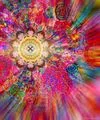
The Phenakistoscope-diamond by Larry Carlson
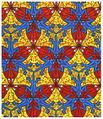
Tessellation by M. C. Escher
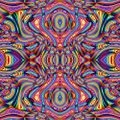
Untitled by Anonymous
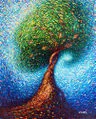
In the tree by Eddie calz
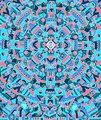
Switch. by Sam Perkins
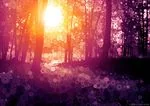
Sun Orb by Larry Carlson
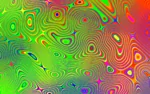
Untitled by Anonymous
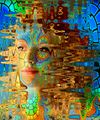
Breakthrough by Larry Carlson
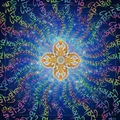
Untitled by Luke Brown
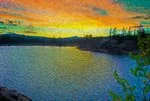
Lake on LSD by mrmedicman
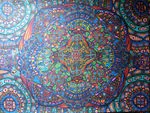
Untitled by Anonymous
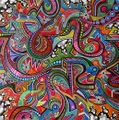
Abstract by Matt W. Moore
Wail to god by Anthony F. Schepperd (0:50)
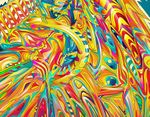
Untitled by Anonymous


Fractals


Shipibo textiles
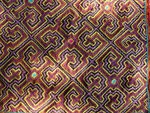
Untitled by Shipibo-Conibo people
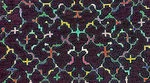
Untitled by Shipibo-Conibo people
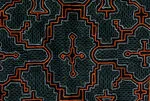
Untitled by Shipibo-Conibo people
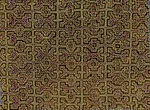
Untitled by Shipibo-Conibo people
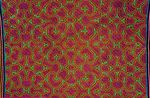
Untitled by Shipibo-Conibo people
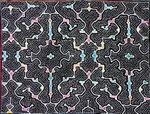
Untitled by Shipibo-Conibo people
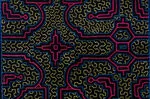
Untitled by Shipibo-Conibo people

Untitled by Shipibo-Conibo people
Untitled by Shipibo-Conibo people
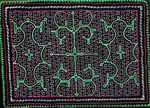
Untitled by Shipibo-Conibo people
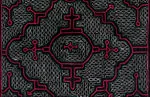
Untitled by Shipibo-Conibo people
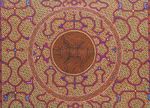
Untitled by Shipibo-Conibo people
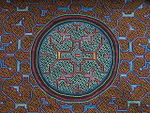
Untitled by Shipibo-Conibo people
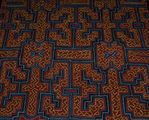
Untitled by Shipibo-Conibo people
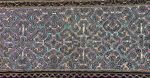
Untitled by Shipibo-Conibo people
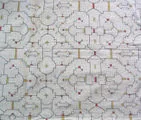
Untitled by Shipibo-Conibo people
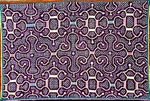
Untitled by Shipibo-Conibo people


Variations
- Intricate vs. simplistic - Geometry can either present itself as incomprehensibly intricate and complex in its appearance or simplistic and comprehensible even at higher doses. For example, the geometry associated with dissociatives tends to be consistently simplistic in complexity while most psychedelics are significantly more intricate.
- Algorithmic vs. abstract - Geometry can either appear to follow mathematical rules and logically consistent forms in its shape (which often results in high amounts of fractals and semi-predictable shapes). In contrast to this, however, geometry can also be completely abstract or random in its appearance in a way that contains infinite amounts of completely unpredictable variety.
- Organic vs. synthetic - Geometry can either feel organic and natural in its visual style or it can feel synthetic and digital.
- Unstructured vs. structured - Geometry can either present itself as completely disorganized and unstructured or it can form and condense into an infinite variety of 3-dimensional mechanistic and ever-shifting structures which are comprised out of and based upon condensed geometry.
- Dimly lit vs. brightly lit - Geometry can either present itself as extremely dark and hard to make out from its background or, in contrast, it can be brightly lit and extremely easy to distinguish from its background.
- Multicoloured vs. monotone - The colour scheme that geometry follows can range from extremely varied and multicoloured in style to consisting of little (if any) colour variety such as blues and greys or purples and blacks
- Flat shading vs. glossy shading - This is separate from the variety of colour contained within geometry. Colours can either be flat, bright and simplistic or glossy with depth, highlights and shading.
- Sharp edges vs. soft edges - Geometry can have sharp edges which are extremely well-defined around its perimeter (sometimes with thick black outlines around its edges). In contrast to this, they can also be soft and blurred around the edges, merging seamlessly into each other in a way that does not affect its intricacy.
- Large vs. small - In terms of its size, geometry can be extremely large and zoomed in or fine and zoomed out in a way that does not affect its level of intricacy.
- Fast vs. slow - In terms of its speed, geometry can shift and morph so fast into itself that the amount of information presented to the tripper in extremely short periods of time becomes incomprehensible to process. In contrast to this, they can move slowly and comprehensibly, swirling and shifting into themselves to present ever-changing geometric forms that can be observed in a much higher level of detail.
- Smooth vs. jittery - In terms of its motion, geometry can be smooth in its motion with a high frame rate or it can be jittery in its motion with lag and a low frame rate.
- Round corners vs. angular corners - Geometry can either have mostly rounded and circular corners or mostly sharp corners with pointed and angular geometry.
- Non-immersive vs. immersive - Geometry can be manifested in front of one's face on a field of vision that feels separate as if it was being presented on some sort of screen without a distinct sense of size or distance attributed to them. In contrast, geometry can feel as if one is completely immersed in and surrounded by them with a distinct sense of attributed size and distance.
- Consistent vs. progressive - Geometry can be manifested as consistent and steady in its intensity, complexity and visibility regardless of disturbances within the external environment. In contrast, however, it can manifest as progressive in its intensity which means that disturbances and sensory input such as bright lights, loud noises and distractions within the external environment will prevent or cut off the intensity, complexity and visibility from building up to its limit whilst darkness will cause it to progressively rise in complexity.
- Level 8A vs. level 8B - At its eighth and highest level of experience, geometry is capable of branching off into two different directions of equal intensity. The first of these is Level 8A – exposure to semantic concept network and the second of these is Level 8B – exposure to the inner mechanics of consciousness.
There are particular attributes of psychedelics which tend to result in level 8B over level 8A and vice versa. Psychedelics which are stimulating in physical effects, synthetic in style, algorithmic in appearance, sharp and angular in corners, flat in shading, unstructured in organization, introspection dominant, and contain low amounts of hallucinatory content usually result in level 8A. In contrast, psychedelics which lead to level 8B are usually sedating in physical effects, abstract in appearance, organic in style, rounded and soft in corners, glossy in shading, structured in organization, outrospection dominant, and contain high amounts of hallucinatory content.
Hallucinatory states
Transformations
Transformations can be described as the experience of a visual metamorphosis of specific parts of one's external environment into other concepts. For example, people who undergo this effect will often report seeing parts of the environment shifting into completely different objects with a huge variety in potential artistic styles and differing degrees in terms of the quality of their detail, realism and animation.
These hallucinations are progressive in nature, which means they form by arising from patterns or objects and then, over a period of seconds, by drifting, smoothing or locking through a liquid process of self-transformation into an entirely new appearance of still or animated objects, people, animals, concepts, places or anything one could possibly imagine. This is greatly enhanced and fueled by the separate visual effect of pattern recognition enhancement, causing vague stimuli (which already look somewhat like abstract concepts due to an inbuilt sense of pareidolia) to transform into extremely detailed versions of what they were already perceived as looking similar to.
The process of drifting, smoothing or locking (which transformations seem to be generated through) requires some minimal amount of focus and concentration to sustain. Losing concentration for an instant can cause the image to fade away or shift into another image. Holding the eyes still will increase the intensity of the progressive transformation.
External hallucinations
External hallucinations can be described as the experience of perceiving imagined visual concepts and occurrences which display themselves seamlessly into the external environment as if they were actually happening. They can be broken down into 4 basic levels:
- Erratic hallucinations - The lowest level of external hallucination generally consists of movement within the peripheral vision, and/or ill-defined, fleeting hallucinations which disappear once a person double takes.
- Vaguely defined hallucinations - At this level the hallucinations are visible within one's direct line of sight but are not fully defined in their appearance. This means that although visible, they do not look completely detailed and are often blurry or semi-translucent with little if any colour.
- Partially defined hallucinations - At this level the hallucinations increase into a high enough amount of detail and vividness to extend beyond transparent, colourless or blurry manifestations. However, they still remain unconvincing and do not quite live up to the detail of completely realistic and convincing hallucinations.
- Fully defined hallucinations - As the vividness and intensity increases, the content eventually becomes comprised of completely realistic hallucinations which do not necessarily disappear once a person double takes. These are generally considered by those who have experienced them to be capable of a completely convincing and photo-realistic appearance.
There are certain factors that directly alter both the likelihood of external hallucinations manifesting themselves and the level of detail which they are rendered in. The more unfamiliar with the external environment one is, the more this effect will be likely to manifest itself. Cluttered areas also tend to produce more external hallucinations. As far as lighting goes, either a dark or dim room is optimum. Darkness produces much more hallucinations but the light present in a dim room will result in less (though more detailed) hallucinations.
Internal hallucinations

Internal hallucinations can be described as the perception of imagery and scenes which are experienced exclusively within a layer in front of one's open or closed eye vision and not seamlessly within the external environment around oneself.
At lower levels, internal hallucinations begin with imagery which does not take up the entirety of one's visual field and is distinctively separate from its background. These can be described as spontaneous moving or still images of scenes, concepts, places and anything one could possibly imagine. They are manifested in varying levels of detail ranging from ill-defined and cartoon-like in nature, to completely realistic and beyond realism through seemingly impossible non euclidean geometric forms. They rarely hold their form for more than a few seconds before fading or shifting into another image. The most universal of these images include:
everyday objects, living things, plants, animals, insects, architecture, structures, shapes, atoms, molecules, complex mathematical formulae/concepts, linguistic concepts, mechanisms, technology, machine creatures, words, text, numbers, fictional characters, geographic locations, memories, self-replicating machines, people, faces, eyes, body parts, organs, food, cultural references, fictional characters, logos, religious symbolism, creatures, monsters, demons, mythology, furniture and more.
As these states of imagery become increasingly elaborate (proportional to dosage), they eventually become all-encompassing, fully-fledged 3D hallucinations which surround the person in a fashion similar to dreams. This creates the feeling that one has "broken through" into another reality. The things which occur within this perceived alternate reality can be anything but generally fall under common archetypes such as contact with autonomous entities, imagined landscapes and scenarios that can seem so unlike anything previously experienced that they are likely too complex to be articulated using language.
The content of these experiences are often described to feel almost exclusively of a personal, religious, spiritual, science-fiction, fantasy, surreal, nonsensical or transcendental nature in their overall theme, regardless of the user's religious or spiritual beliefs. It is not uncommon for people to report that higher levels of internal hallucination feel infinitely “more real” than anything the person has previously experienced.
Overall, the degrees of intensity can be broken down into five simple levels:
- Enhancement of mental visualization - The lowest level of internal hallucination can be defined as a distinct enhancement of the heightened state of mental visualization that one drifts into when simply daydreaming or using the imagination. It can be described as a short-term detachment from one's immediate surroundings, during which a person's contact with reality is blurred and partially substituted by an ill-defined fantasy. The generation of the details of this internal visualization are partially autonomous in nature but mostly controlled by the content of one's current thought stream.
- Partially defined imagery - This level of internal hallucination generally consists of partially defined, blurred and faded imagery within one's peripheral vision.
- Fully defined imagery - As the vividness and intensity increases, the imagery eventually becomes fully defined and realistic enough in its appearance, detail and size that it starts to display itself within the one's direct line of sight.
- Partially defined breakthroughs - As the vividness and intensity further increases, the imagery eventually becomes fully defined, realistic and all-encompassing enough in their appearance, detail and size that they begin to display themselves as random flashes of spontaneous scenarios somewhat similar to dreams. Although all-encompassing, at this level they are partially to completely blurred and transparent in appearance with the one's physical body still feeling connected to the real world. These hallucinations will usually disappear or shift into another set of imagery after a very short period of time but are capable of becoming fully grounded and long-lasting in their manifestation.
- Fully defined breakthroughs - Once the internal hallucinations become sufficiently elaborate they eventually become all-encompassing, permanent, ever-shifting alternate realities which appear completely realistic, extremely detailed and highly vivid in their appearance. They also occur along side of accompanying relevant auditory and tactile hallucinations as well as the sensation of a complete disconnection from the physical body.
Internal hallucinations typically last anywhere from 30 seconds to several minutes before the person slips back into reality or into the presence of another hallucination. There are several different methods through which these hallucinations are shifted between.
- Zooming - Images can switch between each other via the experience of one's vision zooming into or out from the current image to such an extent that it reveals an entirely new image.
- Morphing - Images can switch between each other via transforming the details of their shape and structure to reveal an entirely new image. This can happen in a variety of different speeds and occur in the style of fluidlike motions.
- Sliding - Images can switch between each other by sliding in a direction to reveal an entirely new image behind them.
- Fading - Images can switch between each other by fading into nothingness before fading back into an entirely new image.
- Splitting - Images can switch between each other via splitting into two or more sections which drift away from each other to reveal an entirely new image behind it.
- Tiling - Images can switch between each other by separating into a grid formation in which the comprising square shaped sections rotate at different speeds to reveal an entirely new image.
- Shape transitions - Images can switch between each other by being cut into different geometric sections of infinite variety which proceed to fade into an entirely new image.
Autonomous entities
_by_Luke_Brown.jpg/)
Autonomous entities can be described as the visual experience of perceived contact with beings which appear to be sentient and autonomous in their behaviour. This is a shared subjective effect component that can manifest as a result of both external and internal hallucinations.
Autonomous entities seem to act as the inhabitants of a perceived independent reality. Although many entities seem largely unaware of one's presence, generally speaking they tend to be expectant of the person's sudden appearance into their realm and often choose to interact with them in various ways. The behaviour of a typical entity can vary wildly and seems to depend heavily on one's current emotional state of mind. For example, whilst many will act as loving, kind intelligences, teachers or healers, in certain contexts, they are equally capable of acting as indifferent, uncaring or even as malicious tormentors.
Entities can take any form but subconscious archetypes are present and commonly include humans, friends, family, loved ones, strangers, oneself, shadow people, bodiless super intelligent humanoids, aliens, elves, animals, giant spheres, insectoids, beings of light, anthropomorphic beings, plants, conscious inanimate objects, fictional characters, cartoons, robotic machines, gods, demigods, goddesses, bio-mechanical intelligences, hooded figures, demons, indescribable monstrosities, spirits, angels, shamans, ghosts, souls, ancestors, fantastical or mythological beasts, glitch creatures and more.
Personality types
Regardless of appearance, there are distinctly different personality types of entities which one may encounter, each of which represent a particular subsection of one's own consciousness and can be identified primarily through their personality, but also sometimes their appearance. These are broken down into 3 separate categories below.
- Representations of the self - The simplest personality type of an entity can be described as a mirror of one's own personality. It can take any visible form but clearly adopts an identical vocabulary and set of mannerisms to one's own consciousness when conversed with.
- Representations of specific concepts or people - This category of entity is by far the most varied type in terms of its visual form and immediately perceivable personality. It can be identified as a simulated sentient representation of any internally stored concept and adopts an appropriate personality to fit this to an amazing degree of accurate detail. For example, this specific concept could include people you have met throughout your life, specific fictional characters or symbolic representations of concepts such as abstract ideas, emotions or key parts of one's own personality.
- Representations of the subconscious - This category of entity personality type can take any visible form but is felt to be a supposedly conscious controller behind the continuous generation of the details regarding one's current experience. This is controlled simultaneously along side of the management of one's current own perspective, personality and internally stored model of reality. When conversed with, this category of entity posses abilities which allow them to directly alter and manipulate one's current experience and heal past traumas. They usually adopt an attitude which wants to teach or guide the person and will operate under the assumption that they know what is best for them.
Communication styles
Autonomous entities can communicate with a person via a combination of normal spoken word, telepathy, geometry-based visual linguistics, mathematics and morphing coloured structures of different textures which are innately readable as representations of specific concepts.
In terms of the conversational topics which autonomous entities choose to discuss, they will usually convey insights regarding the overcoming of personal issues or problems within the one's life. However, they can also speak with cryptic or nonsensical messages which seem to have no clear or obvious meaning behind them.
When communicated with through spoken word, the level of coherency in which these entities can communicate with is highly variable but can be broken down into 4 distinct levels. These are listed below as:
- Silence - This level can be defined as a complete unresponsiveness from the side of the entity and an incapability of speech despite their obvious presence within the hallucination.
- Partially defined incoherent speech - This level can be defined as audible linguistic conversational responses and noises which sound like words but do not contain any real content or meaning beyond a vague sense of emotional intent.
- Fully defined incoherent speech - This level can be defined as audible linguistic conversational responses and noises which contain fully defined and understandable words but often lack grammatical structure or an overall sense of general coherency.
- Partially defined coherent speech - this level can be defined as audible linguistic conversational responses and noises which contain fully defined and understandable words with a partially defined grammatical structure and general coherency which conveys its point on a level which may not always be fully understandable but is still capable of conveying a general point.
- Fully defined coherent speech - This level can be defined as audible linguistic conversational responses which contain understandable words and a fully defined grammatical sentence structures or an overall sense of general coherency which conveys its point on a level that is on par with that of own intellect.
Image examples
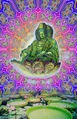
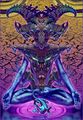
Maitreya by Luke Brown

Jerrestrial detail by Luke Brown
Namaste 3D by Luke Brown
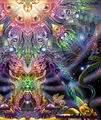
Alpha Centauri by Luke Brown
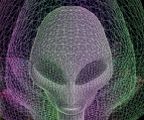
Tryptamine Alien by James L Kent
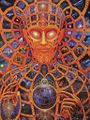
Cosmic Christ by Alex Grey
Id-Aliunde by Beau Deeley
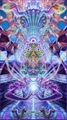
Apotheosis by Luke Brown
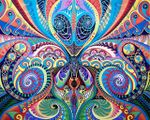
Untitled by Anonymous
_by_Luke_Brown.webp)
Namaste (Trifoliata Mystica) by Luke Brown

Sophia by Alex Grey
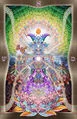
Baphomet by Luke Brown


Scenarios and plots
Scenarios and plots are a shared subjective effect component that manifests as a result of both external and internal hallucinations.
The components which comprise hallucinatory states (autonomous entities, alterations in perspective, and settings, sceneries, and landscapes) are randomly shuffled and spliced into plots and scenarios. These may be positive or negative to experience and are difficult to define in a comprehensive manner in much the same way that one cannot predict the plot of literature and films.
They can, however, be broken down into basic occurrences which generally entail visiting a setting which often contains interactive autonomous entities. Alongside of these, completely unpredictable plot devices and events force the person to become involved within the specific scenario of the particular trip.
These scenarios and plots can be linear and logical with events that occur in a rational sequence which leads onto other events through cause and effect. However, they are equally likely to present themselves as completely nonsensical and incoherent. The plot of these scenarios will often result in spontaneous events which are capable of ending, starting and changing between each other repeatedly in quick succession. The plots can present as new experiences that are unlike anything experienced within the real world, old experiences such as accurate memory replays or a combination of the two.
Hallucinatory plots and scenarios usually feel as if they are being experienced in real-time. When 20 seconds has passed within the hallucination, the same amount of time will have passed in the real world. At other points, however, time distortions occur, resulting in plots and scenarios that can feel as if they last days, weeks, months, years, or infinitely long periods of time.
Perspective alterations
Alterations in perspective can be described as a shared subjective effect component that manifests as a result of both external and internal hallucinations. This experience can be defined as an alteration in terms of the perspective in which a hallucination is perceived through. In just the same way as literary plots, these can be experienced through four alternate vantage points which are described and listed below:
- 1st person - This is the most common form of perspective and can be described as the perfectly normal experience of perceiving the scenario from the perspective of one's everyday self and body.
- 2nd person - This can be described as the experience of perceiving the hallucination from the perspective of an external source of consciousness such as another person, an animal or an inanimate object.
- 3rd person - This is essentially an out-of-body experience and can be described as perceiving the hallucination from a perspective which is floating above, below, behind, or in front of one's physical body.
- 4th person - This the least common form of perspective and can be described as the experience of perceiving the hallucination from the perspective of multiple or even infinite vantage points simultaneously.
Settings, sceneries, and landscapes
Settings, sceneries, and landscapes can be described as a shared subjective effect component that manifests as a result of both external and internal hallucinations.
These can be defined as the experience of the setting in which the plot of an external or internal hallucination occurs. These settings manifest with infinite variety.
When explored, the geography of these settings are capable of rendering themselves as static and coherent in organization but will usually manifest as a non-linear, nonsensical and continuously ever-changing layout which does not necessarily obey the rules of everyday physics. In terms of the chosen locations, appearance and style of these settings, they seem to be selected at random and are often entirely new and previously unseen locations. They do, however, play a heavy emphasis on replicating and combining real life locations stored within the person's memories, especially those which are prominent within one's life and daily routine. Aside from this they common archetypes include:
Planetary systems, galaxies, quasars, jungles, rain forests, deserts, ice-scapes, cities, natural environments, caves, space habitats, vast structures, civilizations, technological utopias, ruins, machinescapes, historical settings, rooms and other indoor environments, neurons, DNA, atoms, molecules, mitochondria, incomprehensible geometric landscapes and more.
Shadow people

Shadow people are a common hallucination for humans to have. They usually appear as a result of sleep deprivation, psychoactive substancess, or hypnagogic states. During this experience, the subject perceives a patch of shadow in their peripheral vision to be a living figure. This can be either animal-like or humanoid in appearance. This hallucination is often accompanied with a feeling of intense paranoia and anxiety.
The visual hallucinations are initially fleeting images always out of the corner of the eyes. As time progresses, however, the hallucinations may appear in full view and one will be able to look directly at them. The bodies of the shadow people are usually entirely black with few features. They sometimes appear to have faces and are able to move or change shape.
These hallucinations are often perceived as being malicious due to intense paranoia and anxiety that often occur simultaneously. Tactile hallucinations, feelings of convincing physical sensations that are not actually occurring within reality, may occur. Auditory hallucinations may also manifest themselves, causing one to perceive that the shadow people are talking to them.
Image examples


Unspeakable horrors
Unspeakable horrors can be described as the experience of prolonged exposure to ineffable scenarios and hallucinatory content of a scary and/or disturbing nature which are often directly influenced by one's own personal fears. This can occur during high dose hallucinogenic experiences, particularly those in which the user is currently undergoing negative emotional stress and personal problems of an introspective nature.
Although the content which comprises these states are indescribable by their very nature and largely dependent upon the fears of those who experience them, certain themes and archetypes can manifest themselves. These are not limited to but may consist of:
- Settings, sceneries, and landscapes of an intrinsically sinister and threatening nature - This can include scenes of suffering directed towards oneself or other people such as being tortured or the direct experience of personal fears. It can also include the visitation of hellish landscapes, ancient monolithic Lovecraftian architecture, the destruction of civilizations, and scenes in which one is being hunted as prey by malevolent creatures or forces.
- Autonomous entities of an intrinsically sinister and threatening nature - This can include demons, deformed monstrosities, hooded figures, mocking entities and otherwise normal human beings who are often suffering with exposed internal organs.
- Machinescapes of an intrinsically sinister and threatening nature - This can be described as functionally identical to the experience of machinescapes with the only difference being that its comprising parts almost exclusively consist of indescribably complex interlocking, ever-shifting biomechanical gore, organs, disembowelment, or body parts.
- Geometry of an intrinsically sinister and threatening nature - The sub-components listed above are commonly comprised of and embedded within standard hallucinogenic geometry containing innately readable representations of pure conceptual fear, horror, and suffering which can be felt through all of the senses as they are perceived.
- Fearing for the fabric of one's sanity - This can be described as feelings that one's current perception is so horrific that they will surely be left permanently insane with severe psychological damage. It often leaves people with a sense that ordinary life is a thin shell over a reality which is so alien and abstract in comparison that merely contemplating it would damage the sanity of any ordinary person.
The experience of this component and how it is interpreted by those who undergo it seems to differ wildly between people. While most individuals would find this state to be traumatizing if unprepared, many people find that, although terrifying, it is exhilarating and character building in equal measure. To ensure that one does not find themselves in this state unwittingly, heavy dosages of hallucinogens should be avoided without practice and one should always work their way up to the higher levels from low dosages in small increments as they feel comfortable doing so.
Image examples
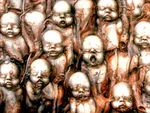
Landschaft by H.R. Giger
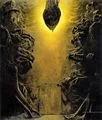
Untitled by Zdzisław Beksiński
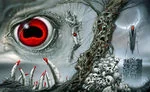
Lovecraft's Nightmare by Michael Whelan
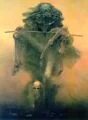
Untitled by Zdzisław Beksiński
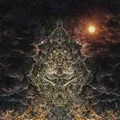
Hatheg-Kla by MOracz
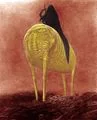
Untitled by Zdzisław Beksiński
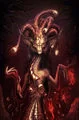
Vigilant Jester by Tesper
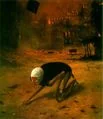
Untitled by Zdzisław Beksiński
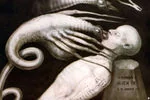
Prometheus by H.R. Giger
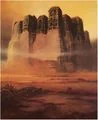
Untitled by Zdzisław Beksiński
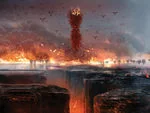
Paradise lost clean by emaydani
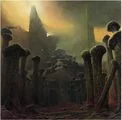
Untitled by Zdzisław Beksiński
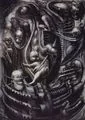
National park by H.R. Giger
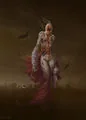
Untitled by Adrian Grajdeanu
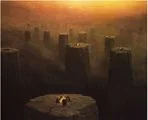
Untitled by Zdzisław Beksiński
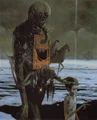
Untitled by Zdzisław Beksiński
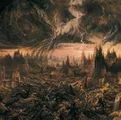
Abrogation by Chaos inception
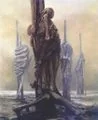
Untitled by Zdzisław Beksiński
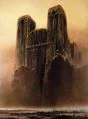
Untitled by Zdzisław Beksiński
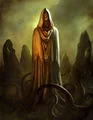
King in Yellow by Borja Pintado

Untitled by Zdzisław Beksiński
C-demon by Alex Reis
Untitled by Zdzisław Beksiński
A merging to the boundless by Star Gazer
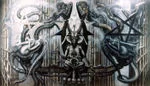
The spell by H.R. Giger


